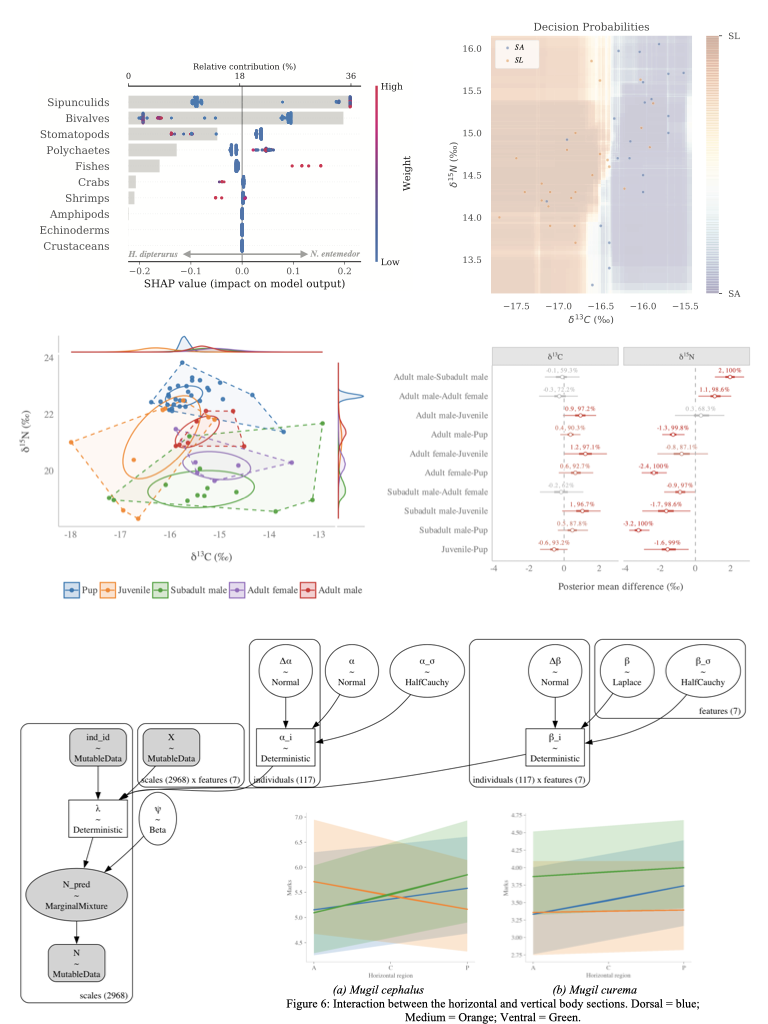
Research
My research focuses on marine predators as integrators of ecological processes. I am particularly interested in how trophic relationships, habitat use, population structure, and behaviour vary across space and time, and how these patterns can be used to understand environmental variability and human impacts on marine ecosystems.
Much of my work centres on marine mammals, particularly small cetaceans, and combines field ecology with stable isotope analysis, molecular tools, remote sensing, and quantitative modelling.
Ecosystem sentinels
Marine predators integrate ecological information over broad spatial and temporal scales, making them useful indicators of ecosystem variability and change.
I am interested in developing and evaluating marine mammals as ecosystem sentinels by linking variation in their foraging ecology, habitat use, behaviour, and population structure to environmental processes and anthropogenic pressures.
This approach requires distinguishing changes occurring at different ecological levels—for example, separating shifts in isotopic baselines from changes in trophic position or prey use—and integrating information from predators with complementary measurements of their environment and food webs.
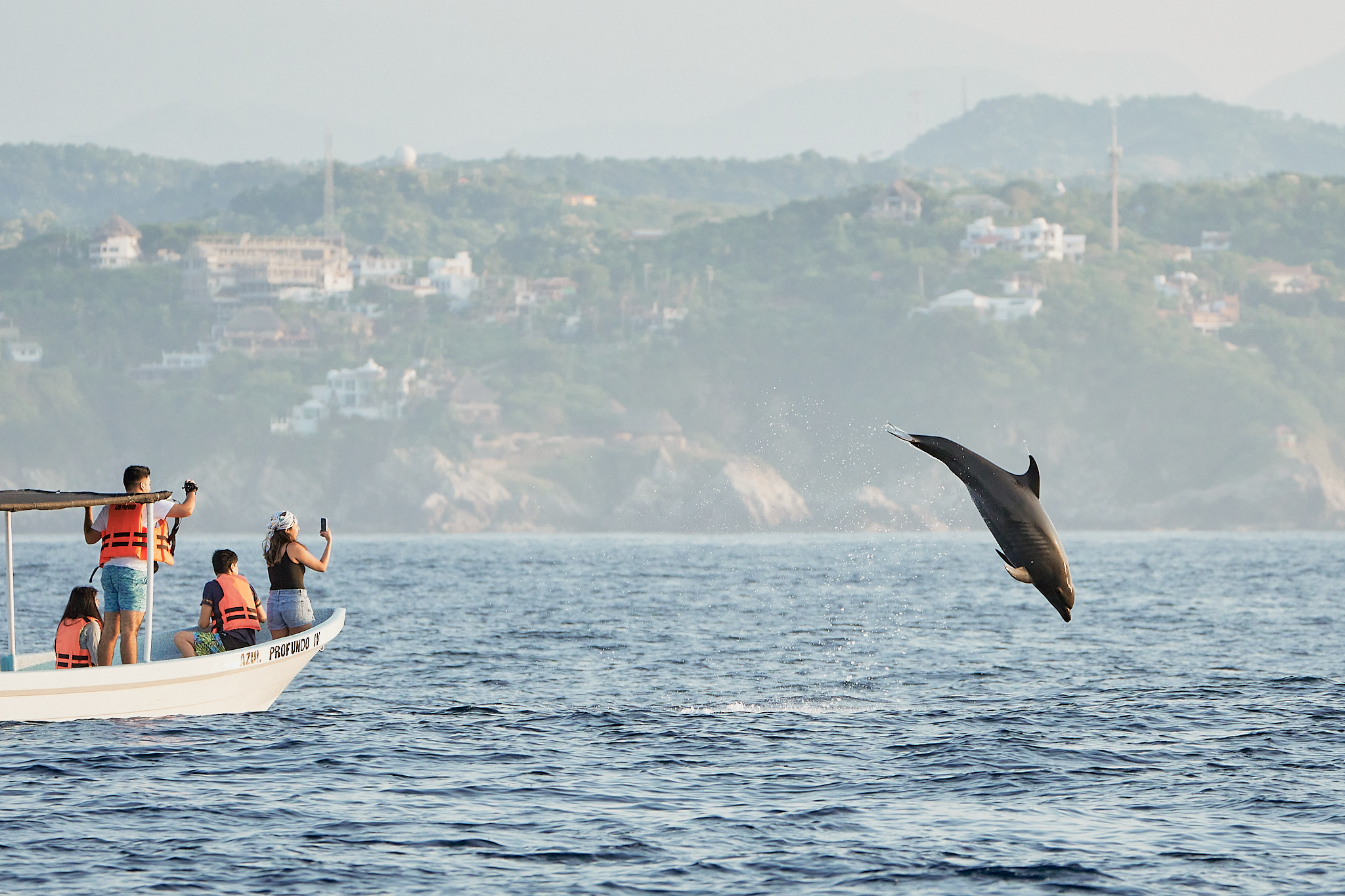
Trophic & isotope ecology
A major component of my research examines how marine predators acquire and partition resources.
I use stable isotope analysis to investigate diet, trophic position, habitat use, and temporal variation in foraging ecology. My work includes both bulk carbon and nitrogen stable isotopes and compound-specific isotope analysis of amino acids, which can provide additional information on trophic processes and variation in isotopic baselines.
I am particularly interested in approaches that move beyond simple interpretations of bulk isotope values by explicitly accounting for the multiple biological and biogeochemical processes that contribute to observed isotopic variation.
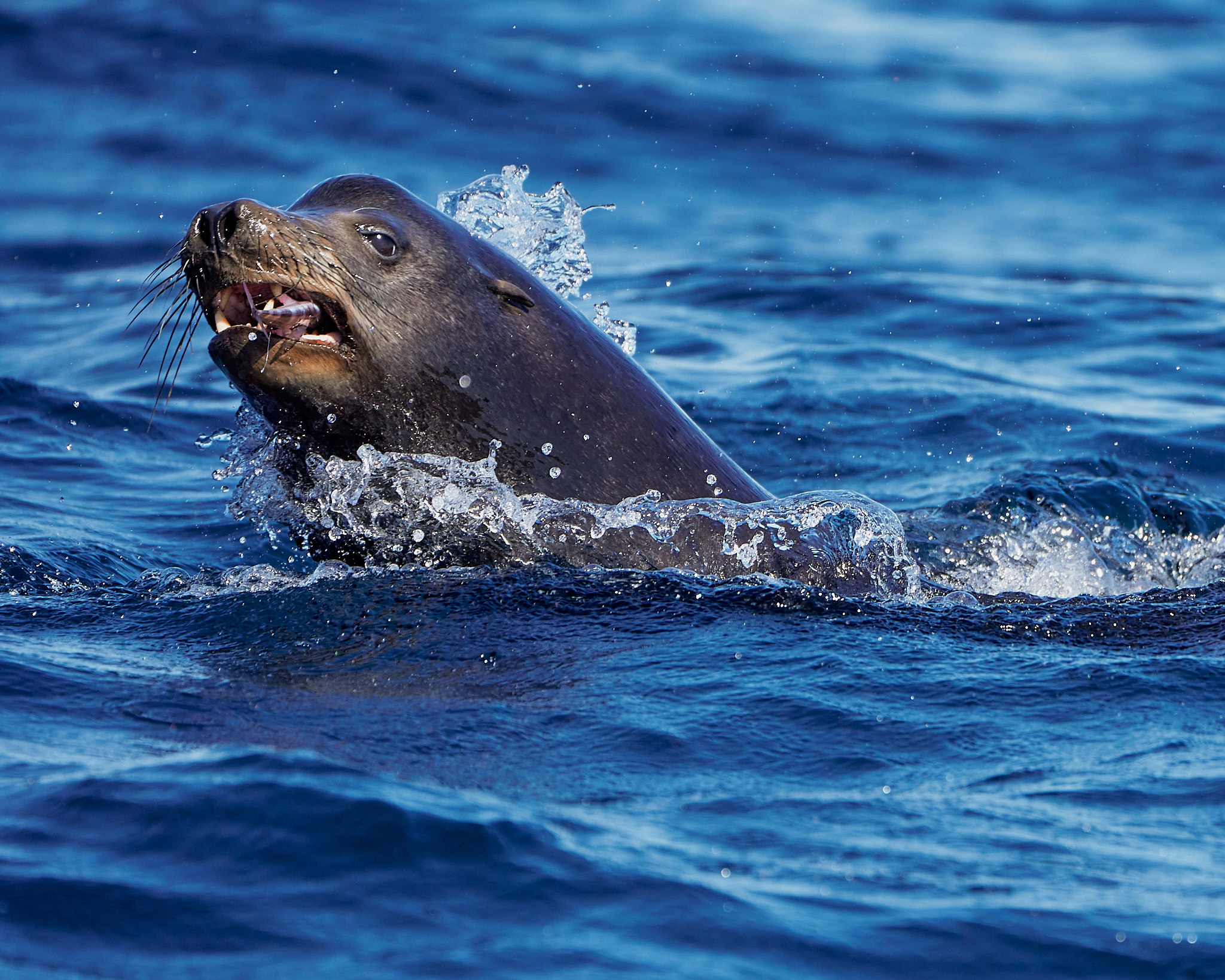
Population, behavioural & spatial ecology
Ecological variation among individuals and populations can influence how species respond to environmental change.
My research therefore also examines population structure, habitat use, movement, behaviour, and resource partitioning across spatial and temporal scales. I combine ecological observations with molecular, isotopic, spatial, and behavioural information to investigate how these sources of variation interact.
This includes an interest in human–wildlife interactions and in how fisheries, vessel activity, tourism, and other anthropogenic pressures influence marine mammal behaviour and habitat use.
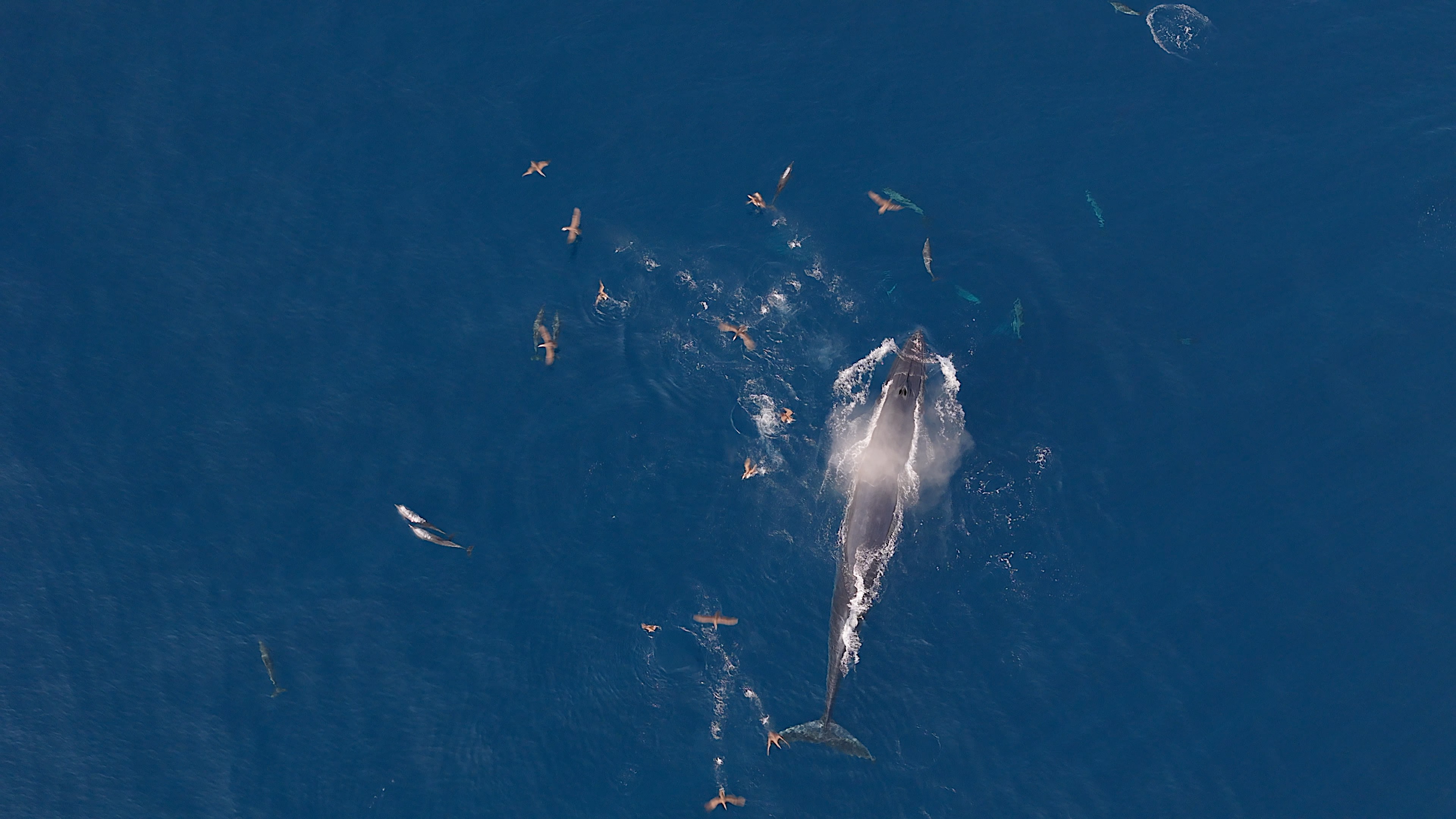
Quantitative & computational approaches
Quantitative analysis is a substantial component of both my own research and my collaborations.
I primarily work within a Bayesian framework, using hierarchical models to represent ecological processes and their associated uncertainty. Depending on the question and data structure, I also use machine learning, spatial analyses, multivariate methods, network approaches, and simulation.
I place particular emphasis on reproducible workflows and on matching model complexity to the ecological question rather than treating increasingly complex methods as an objective in themselves.